by Olivia Stone
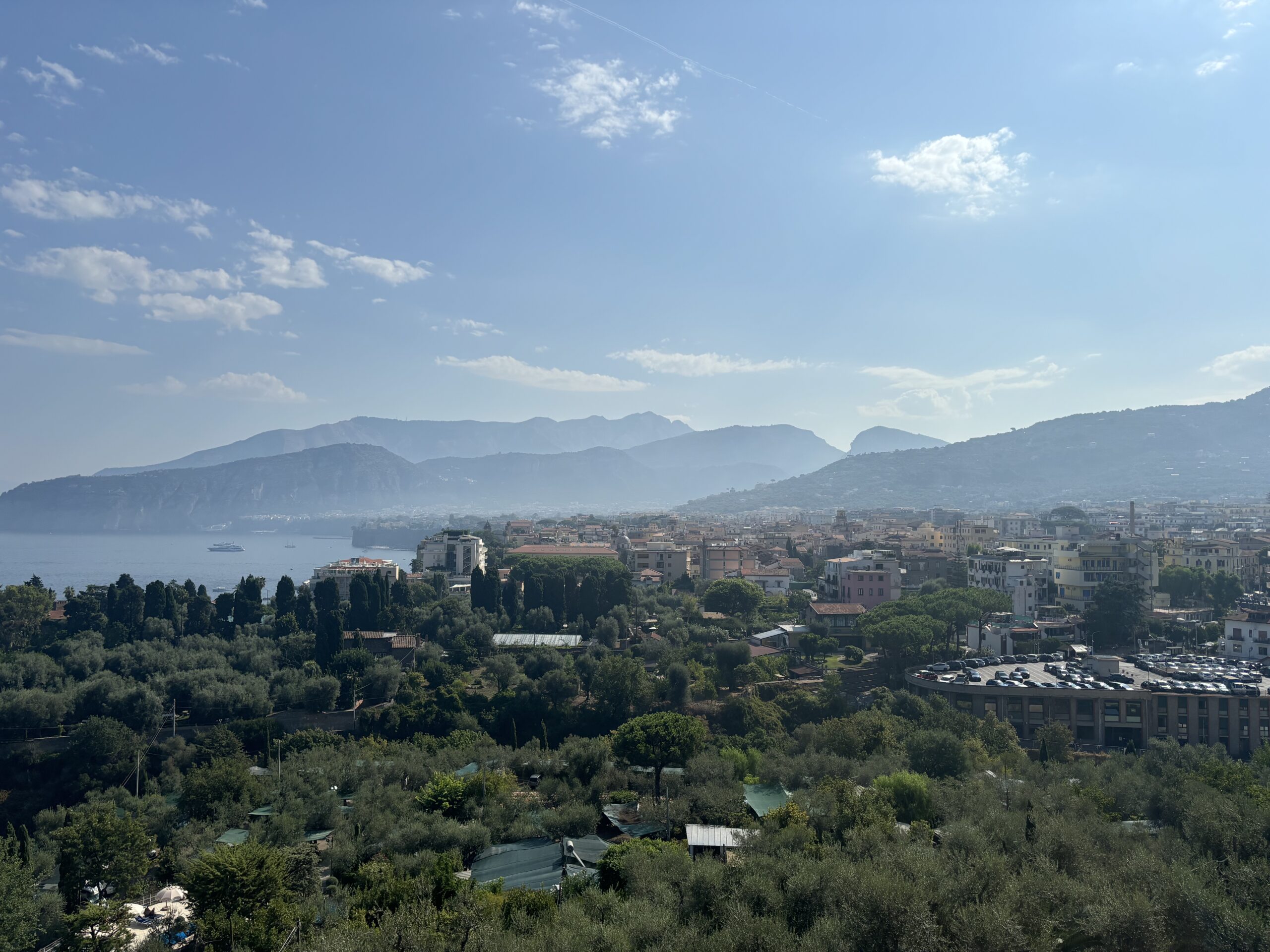
Citrus trees have long stood as a symbol of prosperity, abundance, and good fortune. Their bright fruits and evergreen leaves leave a constant reminder of life’s vitality. On the Sorrento Peninsula, citrus trees represent far more than agriculture: they reflect the region’s identity and resilience, embodying what many call the “soul” of the Amalfi Coast.
Each November, communities across Italy come together to celebrate Festa dell’Albero or Tree Day, honoring children born or adopted that year. Parks and squares are filled with young trees, chosen to support local ecosystems and pollinators. Students, locals, and city officials gather to plant trees, a tradition that has been cherished by the community since 1998.
During my time studying abroad, my sustainability professor sent a short email to my class and me: “Class tomorrow will take place in the park to celebrate Tree Day.” I turned to my friend and said, “Tree Day? I have never heard of that.” I imagined something small, we would look at some trees, discuss, and move on with our day.
Instead, the next day we arrived cameras, videographers, city officials, parents, school children, teachers, and the mayor of Sorrento, all in the park with us. Our class of nineteen students suddenly felt very small within a larger community gathering. Trees were lining the park, and shovels were stacked up against them. A shovel was placed in my hand, and just like that, we were no longer observers.
As we began digging, I learned that each tree represented a child born in Sorrento since the beginning of the year. There stood ninety-two new trees that would grow alongside ninety-two new lives. Though the effort was part of a larger goal, over time, the trees would create an urban forest, weaving between buildings and becoming part of the city’s culture.
The shovels were passed from classmate to classmate, then to local students, then down the line to every person that gathered to celebrate new life. Local students shared their artwork, poems, and reflections about the history and culture of Festa dell’Albero. Even without understanding most of the Italian, I could feel the life and meaning the trees brought to their stories. From a young age, they are taught to cherish and respect the earth around them, a connection that was clear in every tree we planted.
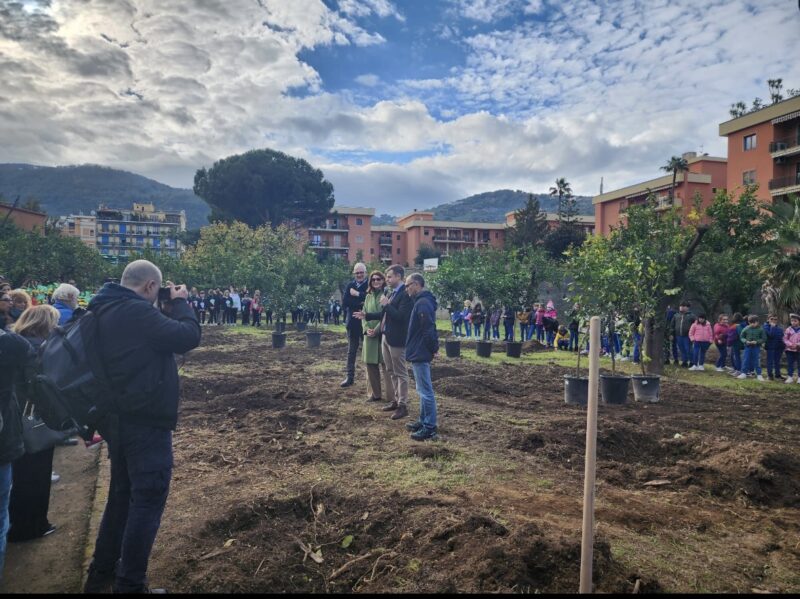
As my classmates and I lifted the tree into the ground, I could feel the weight of history. The life we were planting was connected to the past, present, and future of the community. After lowering the tree, we padded the cold soil down, grounding something that would outlive our semester abroad. Somewhere in Sorrento lived a baby that would grow alongside this tree. And long after we boarded our flights home, it would continue to stretch beyond the Mediterranean Sea.
What we learned for the past three months in the classroom became real in that moment, deepening my commitment to caring for the land and generations that follow.
Growing up surrounded by nature, I have always been drawn to trees. There’s something about them that grounds me, reminds me to be present. A lesson to enjoy the little things in life. Like the sunlight shining through the tips of the trees or the leaves, colorful stems bringing brightness to the world. Giving back to the planet, in whatever small way I can, has always felt meaningful.
Watching the community come to care for the land reminded me of one of my favorite childhood books, The Giving Tree by Shel Silverstein. A story about a tree growing alongside a boy, offering her apples and branches as he builds his life. As new citrus trees were placed into the ground and old ones stood quietly behind, it felt as though we were a part of the story.
We grow. We take. We build our lives from what the earth offers us.
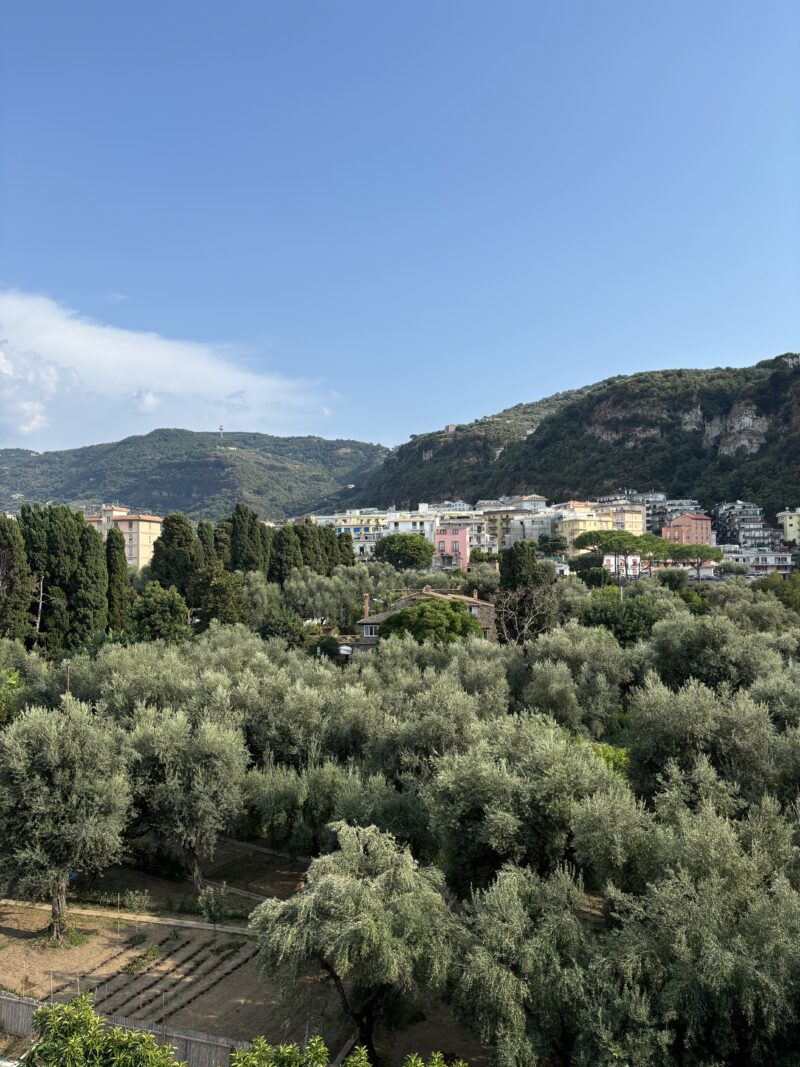
But in Sorrento, I witnessed something different. I watched a community give back, intentionally and collectively. Ensuring what sustains them will continue to flourish for the next generations. The citrus trees are not simply there to shape the landscape, and for those to enjoy their fruits, it stands as a message: if you care and cherish the world beneath your feet, it will make sure to take care of you in return.
That afternoon, our small class left more than footprints in the park. We left roots. A small part of us will continue to grow in Sorrento. And for me, I will continue to take the knowledge we learned that day and share it across the globe. Festa dell’Albero is not just a celebration of life; it is a history book written in time. Like The Giving Tree, it reminds us that the earth offers itself generously, and when we care for it in return, the cycle of giving and receiving sustains both life and story.